Self-management skills are essential for students to succeed both in and out of the classroom. These skills allow students to oversee their learning and behavior independently.
Self-management enables students to set goals, balance priorities, manage their time, organize their workspace, and self-monitor their progress. Students equipped with robust self-management capacities exhibit greater motivation, productivity, and achievement.
Fortunately, self-management can be directly taught and practiced. When students develop self-management, they gain valuable skills that equip them for lifelong success.
Why Self-Management Matters
Self-management abilities lead to greater autonomy and responsibility. Students who manage themselves requite less monitoring and external discipline. They make positive choices and complete tasks with minimal oversight. Self-led students have more opportunities to demonstrate and develop leadership skills as well.
Additionally, self-management boosts effort and persistence. Students who manage themselves are less likely to become discouraged or frustrated. They can navigate barriers and employ personal coping strategies. Self-managed students are self-starters who require less external accountability and reinforcement.
Fostering self-direction also enables differentiation. Students progress at varying paces and require accommodation for individual learning needs. Developing student self-management allows teachers to personalize support better. Customized assistance helps each student reach their potential.
Overall, self-management prepares students for the demands of higher education, modern careers, and adult life. The world expects time management, prioritization, organization, and self-control. By teaching these abilities early on, students gain a major advantage moving forward.
How to Teach Self-Management Skills
A developmental approach is essential for instilling self-management in students. These capacities require modeling, guided practice, and eventual independence. There are several key strategies teachers should utilize:
- Set clear expectations and routines. Students need unambiguous guidance regarding responsibilities, procedures, and rules. Consistency allows them to internalize systems.
- Model self-management skills. Demonstrate how you set goals, manage time, stay organized, etc. Explain your thought process out loud.
- Try collaborative goal setting. Involve students in target setting. Guiding them through smart goal formulation builds self-direction.
- Use prompts, reminders, and checklists. These tools help students establish and maintain helpful habits. Fade them out as independence increases.
- Reinforce self-management behaviors. Using descriptive praise and incentives, recognize when students demonstrate self-direction. This motivates habit development.
- Perform think alouds. Narrate how you monitor and correct your own behavior in the moment. “I’m getting distracted looking at my phone. I need to put it away to stay focused.”
- Teach reflection. Have students assess their self-management abilities and identify needs for improvement via journals, discussions, and self-assessments. Reflection breeds maturity.
Specific Self-Management Skills to Target
There are particular abilities that make up a robust self-management skillset. Ensure instruction touches on each:
Goal Setting
Students need guidance in establishing short and long-term performance targets tied to high priorities. Collaborative goal formulation with teachers helps students set optimal aim points.
Have students document goals and post reminders. They can track progress, assess mastery, adjust objectives as needed, and set new goals based on data.
Time Management
From assignments to social commitments, students must juggle competing priorities. Students benefit from support in creating schedules, maintaining calendars/planners, being punctual, balancing school-personal life, and managing workflow/pace.
Stress anxiety reduction, breaking large tasks down into smaller steps, and saying no to overload. Share techniques for making the most of time like productivity sprints and timers.
Organization
Organization helps students keep track of work, manage materials, and maintain a workspace conducive to productivity.
Strategies like color coding, notebook organization, locker organization, digital file hierarchies, and regular cleanup routines directly impact performance. Stress maintaining systems for both physical and digital paperwork.
Self-Monitoring
Self-monitoring teaches students to track progress, assess understanding, identify knowledge gaps, note completion of responsibilities, pinpoint challenges, record setbacks and achievements, analyze behaviors and habits, and request help when appropriate.
Journals, data collection, checklists that students self-evaluate, and discussions help develop awareness.
Self-Advocacy
Encourage students to articulate support needs, request accommodations, obtain assistance from peers/teachers when necessary, navigate conflicts or challenges, problem-solve independently before seeking help, and overall take charge of their learning journey. Emphasize student empowerment through self-advocacy.
Modeling Self-Management
Teachers must model the same skills they aim to instill in students. How teachers manage themselves in the classroom impacts student self-direction. Make your time management, organization, planning, goal setting, and self-monitoring visible.
Verbalize struggles and thoughts at each stage. For example, show students your lesson plan development, clean out your desk as they clean theirs, set SMART goals for class achievement and share progress.
This demonstrates realities and problem solving processes behind self-regulation. Students observe and then mirror.
Troubleshooting Setbacks
Self-management requires ongoing practice and refinement. Setbacks will occur as students work to improve habits and take ownership over behavior.
Reinforce that mistakes are learning opportunities, then help students pinpoint issues. Facilitate solution finding versus directly prescribing next steps. Analyze breakdowns in self-regulation together by asking questions like:
- What was the difficulty you encountered?
- What could you do differently next time?
- What support or resources would aid self-management?
- How can we prevent this roadblock moving forward?
Then ensure students feel empowered to try new strategies. Coping well despite pitfalls accelerates progress over time.
Incentivizing Self-Management
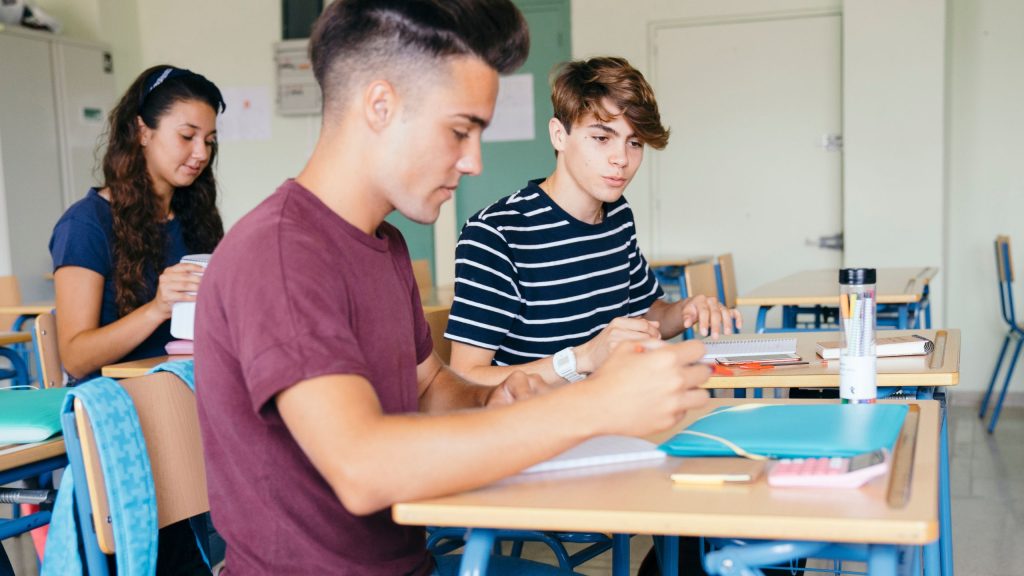
External rewards help initial habit formation but should fade as self-direction increases. However, used carefully and sparingly, recognition helps demonstrate that self-management is valued. Possible incentives include:
- Praise specific behaviors verbally and on written work
- Send positive notes home communicating student progress
- Award certificates/prizes for reaching self-management milestones
- Permit special activity time or computer access for accomplishing independent tasks promptly
- Display exemplary checklists/organization systems as models
Emphasize mastery and effort over earned rewards. Keep incentivizing occasional not routine. The goal is facilitating intrinsic motivation and self-reinforcement long term.
Developmental Continuum
Students move through stages as they become more self-directed. At first, provide significant support. Slowly shift responsibility to students as skills strengthen. The end goal is independent self-management. Progress flows as:
- Teacher Directed: Teacher manages student behavior and work tasks directly
- Guided Practice: Teacher guides students through self-management steps collegially
- Peer Supported: Students collaborate in small groups to reinforce shared self-management
- Student Managed: Students independently exhibit target behaviors and habits
- Generalization: Students utilize self-direction across contexts and situations without prompting
Anticipate ups and downs across this continuum. Respond skillfully when students struggle with increased autonomy. Provide reassurance and recalibrate challenges to avoid discouragement. Progress gradually towards full empowerment.
Outcomes
If appropriately scaffolded over time, self-management instruction has profound effects:
- Greater student independence and responsibility
- Less teacher oversight required
- Fewer distractions and behavior issues
- Higher productivity and work completion
- Increased pride, confidence, and leadership skills
- Improved academic outcomes and test scores
- Enhanced executive functioning skills
- Better outlooks about learning and school
- Higher graduation rates and post-secondary success
In summary, self-management helps students take charge of their education on a deeper level. Make developing student self-leadership a top priority for your classroom and school.
Frequently Asked Questions
- How can I motivate students to self-manage consistently?
Praise effort and highlight incremental progress. Incentivize wisely at first. Remind students of the benefits they will experience with improved organization, time management, planning, etc. Implement classroom rewards or recognition for positive steps. Share stories of others’ success with habitual self-management.
- What if a student refuses to develop self-direction?
Determine the root cause. Often reluctance ties to skill deficiencies versus defiance. Reassure the student that self-management involves learned behaviors requiring patience. Break skills down further. Offer more scaffolding and consistent feedback. Peer buddies can increase confidence during guided practice. Praise approximations of the desired behaviors.
- How should I adapt self-management instruction for neurodiverse students or those with executive functioning challenges?
Simplify target skill sets. Extend timelines incrementally. Increase prompts and reminders as needed. Have students track fewer goals, schedule fewer daily tasks, or manage only 1-2 class periods at first before expanding self-direction. Offer examples of age-appropriate systems for organization/planning. Recommend assistive technology tools to aid focus, time perception, and remembering responsibilities.
- What if parents are frustrated that their child lacks self-management skills?
Emphasize that these abilities require ongoing coaching and take years to instill. Provide parents with practical home strategies to reinforce your efforts at school. Suggest ways to motivate and reward milestone achievement. Ensure parents understand normal skill progression and how fluctuations tie to brain development. Encourage realistic expectations and praise for effort. Frequent parent-teacher communication maintains alignment.
- When should students realistically manage their own learning and behavior completely independently?
Mastery occurs at different ages per the individual. However, by middle school, students should increase independence managing transitions, materials, schedules, assignments, and behavior related to school. Allow gradually broader self-direction in high school assuming foundational habits are set. Still provide ample structure alongside autonomy to avoid floundering. By college, students must fully self-regulate to thrive. Use scaffolding judiciously to lead students toward increasing responsibility at each level.
Conclusion
Self-management empowers students to take the reins over their learning and success. These essential capacities enable students to work independently, realize potential, achieve goals, and prepare for higher education and careers.
Develop student self-direction incrementally utilizing modeling, guided practice, and scaffolding. Employ direct instruction, collaborative target setting, positive reinforcement, and consistent routines. Address pitfalls with encouragement and problem solving.
Taken together, self-management leads to motivated, mature students poised to excel. Prioritize these life-changing abilities beginning in primary school through graduation. Self-led students become unstoppable in class and beyond.